

Sixth birthday for Lucy means that she’s now a school-girl. For other kids, this might mean some big changes. For Lucy, not so much. Peter and Susan are homeschooled, so now we Lucy is added to the “school kids” during “school time” rather than playing with Edmund.
She’s been doing a bit of phonics and learning to read since her fifth birthday, so we’re really not planning on changing anything. But, we have to sign a one-page form with the Victorian government that we will instruct her in the Key Learning Areas.
Most of the time I can’t even tell you what the Key Learning Areas are. I can’t tell you what is expected of a child of their age. I know what they need to work on. I often know which weakness is holding them back, which area needs work, and which ones are strengths that we can continue to build upon.
What year is Lucy in? Hmm, I think she might be in Grade Reception or Grade One if she went to a school. We tend to take school years from birthday to birthday, though. The kids are taught to answer the “What grade are you in?” question with being five less than their actual age (in other words, 10 year old Peter is in Grade Five, eight year old Susan is in Grade Three, and six year old Lucy is in Grade One).
So, I guess this is a good time to reflect on what Lucy needs over the next two years if I was to pay attention to VELS (the Victorian education standards that I’m signing the agreement to instruct in).
In reality, the time we consider “school” takes up to about 30 minutes a day with her … but that doesn’t include the time she sits there staring at me silently, willing me to let her ride her bike instead of doing school.
Maths
I actually feel that she’s not ready for formal maths yet. I’m more interested in her learning concepts at this stage. However, we are doing a bit when I sit down and think about it. It is:
She knows her shapes and can count to 100. She loves counting – she counts everything, and often groups things together. She can’t see a wood-panelled wall without stopping to count how many panels there are. We encourage this, and her other interest of finding patterns in everything.
We make our own bread as Peter, Susan and Lucy are gluten-intolerant. Lucy has learnt how to measure out 400 millilitres to the bottom of the meniscus. She can correctly choose the right thing if I ask her to “measure out 1 tablespoon of xanthan gum” or “1/4 cup of sugar”. She can also evenly share out food between four people – something they are all very good at, because you wouldn’t want your brother or sister having half a crumb more than you!
Lucy is interested in the idea of addition. She enjoys quizzing Peter on his maths facts, and frequently does so. As Peter thinks the world of his youngest sister, he always answers her. “42 + 16?” or her favourite that she thinks is really hard is something along the lines of “100 + 24?” These impromptu maths quizzes last until Lucy is distracted – anywhere from a few minutes to an hour.
Susan, who’s eight, has been assigned to teach Lucy her addition facts. So far, they’ve done “plus zero” and “plus one”, and are currently working on “plus two”.
This is more for Susan’s benefit than Lucy’s, as I believe that teaching is the proof you know and understand a subject well. Susan is showing that she can answer her addition and subtraction facts accurately in less than three seconds, which is what I require of them.
Now, Susan needs to demonstrate that she understands as well as knows them. The girls use the abacus and square blocks from Right Start, as well as the Math U See blocks. They talk and use these manipulative. They use the whiteboard to write sums and answers, and draw diagrams. I always sit with I occasionally add to or clarify what Susan has said. Or more frequently, I tell her to stop over-complicating it or skipping ahead or leaving out details.
English
We are very strict about phonetics only. She has verbal dyspraxia, and so has had many years of speech therapy. Unfortunately, kids with dyspraxia commonly have dyslexia, so we are being very particular about not teaching her sight words. The phonetic method is much slower, but we are finally seeing some progress.
Her early work on literacy has been to learn to break words apart into both sounds and syllables, as well as build sounds or syllables up into words. She’s learnt the 70 phonograms and to identify syllables, along with the patterns and rules associated with syllables. She’s also worked on connecting voice on and voice off pairs (for example: d and t, b and p, f and v, k and g, s and z, ch and j).
She knows her 70 basic phonograms very well, now.
She can look at the letter s and tell me “/s/ or sometimes /z/”, or the letter C and tell me “it says /k/, but before ‘e’, ‘i’ or ‘y’ it says /s/”. Or look at the phonogram ‘sh’ and tell me by rote (with very little understanding) that “/sh/ used at the beginning of a word, the end of a syllable, but not at the start of any syllable after the first except the ending ‘ship’”.
She can correctly sound out most words of one or two syllables, and sometimes three syllables. She also understands each word, as she frequently stops to comment on the word.
However, she can’t seem to remember them. So, every single time she sees a word she sounds it out again. She can, at present, only recognise her name, her siblings names, Mum, Dad and ‘the’ by sight. Even when she reaches the end of a sentence, she can’t remember the beginning of the sentence.
Sounding out a word like ‘his’ she will sound out h. i. ss, and shake her head, then try again and say h. i. z and nod.
So, what does this actually mean each day? There are four things that we do:
- We quiz her on all the phonograms, and she has a phonogram quiz on her ipod that I have made for her. We often hear her doing this by herself.
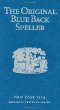
- She does her spelling. She generally does about 20 words a day. We frequently repeat the same words. We use the 1824 Webster’s Blueback Speller for this. The process is this:
- I will give her a word such as, “black”.
- She will have to tell me, “One syllable and four sounds”.
- “The /k/ is ck,” I tell her, “Why can we use ck here?”
- She is expected to respond, “Because it’s after a short single vowel.” I don’t think she actually understands this, yet, but I know from working with Susan and Peter that the understanding slowly dawns.
- She practices her handwriting. We’re fairly strict that it has to be cursive, and that she must hold the pencil and form the letters correctly.
- Like Susan, she can and does reverse every letter that she possibly can. She’s starting to connect her cursive letters, so hopefully this will help her not reverse them as much. It’s about the only thing that helps Susan.
- She reads me a page of “Little House in the Big Woods” by Laura Ingalls Wilder. There’s little comprehension, but she can sound out most of the words without much help.
We don’t strictly use any particular program. We started off using Phonics Road to Reading and Writing. I found it rather good at the start, but then I didn’t like how prescribed it was. It’s probably great for people who are just starting off, or want some hand-holding. It’s expensive, but it’s a complete language program, and the videos do most of the teaching.
We then moved over to the similar but less scripted Spell to Write and Read. I think I’d go nuts trying to follow it to the letter, but I’ve learnt a lot about English language phonetics from it that has helped with teaching the kids. I now use it in conjunction withWebster’s Blue Back Speller in the sort of combination that I’ve described above. In other words, I don’t use either strictly, but I use a bit of both.



Language Other Than English
We don’t really do much of this formally. However, like Peter and Susan, she will be learning Latin. She has Song School Latin on her ipod and loves it. She frequently sings these and knows the vocabulary in it well. She also has the vocabulary chants from Latin for Children on her ipod, as well as the instructional videos, and is teaching herself a lot of these, too.
It is all a game to her at the moment, but she enjoys substituting Latin words she knows for English words such as, “Is cena (dinner) ready yet?”
History and Geography
This is just the places we travel and the things we do. As I’m sure anyone else who travels or visits a place, we read all of the information boards. We try and find out, and then discuss the social and environmental history of the region.
Science
She’s six, so this isn’t exactly consisting of physics and chemistry. She’ll comment “I know what everything in the world is made of. Atoms.” But I don’t think there is a lot of understanding there, more parroting what she’s heard me discussing with Peter and Susan.
Science for her involves simple observations like that when gelatin is added to hot water, it will turn to jelly when it cools. We talk about the weather and discuss what the wind, rain and clouds are. We talk about the animals she sees so that she can learn what their predators are, what they eat, and the environment that they live in.
In some areas, we can discuss the effects of erosion, or the formation of the rocks, or in other words how the environmental history of the area makes it what we see today. This has been particularly at places like the West MacDonnell Ranges, Ayres Rock, The Olgas, Palm valley and Kings Canyon in the Northern Territory, and along the Great Ocean Road in Victoria. We can also discuss the cycle of floods and droughts when we see dry lakes.
We’ve explained about how bacteria can make the black streaks on the rock at Uluru and Ayres Rock, and yet different bacteria makes some lake water appear pink.
All in all, it’s really not much. I could have put it really simply as … I’m teaching her how to read. We talk about the places and things we see and visit. The rest can wait until she can read well.


Latest posts by Amy and Jarrad (see all)
- While in Sydney - January 24, 2013
- Festivals Around the World - January 23, 2013
- Off to Sydney - January 18, 2013
 About Amy and Jarrad


